AI for Logistics &
Supply Chain
Freight margins are thin, and one delay ripples through the whole chain. We build AI systems that give freight operators, 3PLs, and supply chain teams live shipment visibility, better forecasts, and less manual tracking.
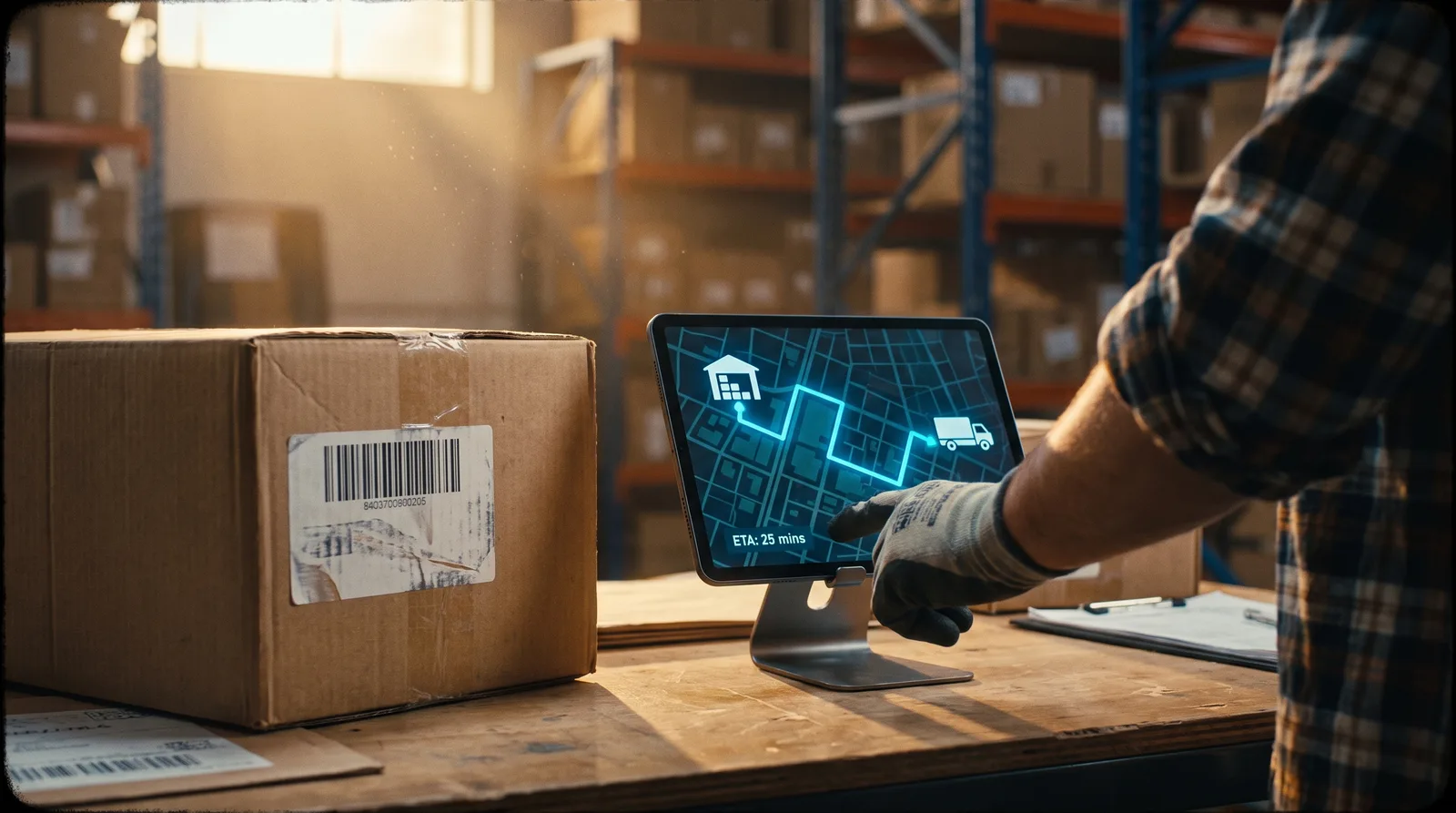
The logistics pressure points
Where the margin gets squeezed.
Visibility gaps
Shipments go quiet between carriers, customs, and last-mile partners. Customers call asking where their order is, and the team has no clean answer.
Routes that don't adapt
Fixed route plans ignore traffic, weather, fuel prices, and delivery windows. Every vehicle running an outdated route burns fuel and time it didn't need to.
Demand that's hard to predict
Seasonal spikes and shifting client orders strain warehouse space and carrier capacity, especially when forecasting still runs on spreadsheets and gut feel.
Paperwork that piles up
BOLs, AWBs, customs declarations, and proof-of-delivery documents move through email and manual queues. Each handoff adds a delay that shows up downstream.
Our solutions
AI that keeps freight moving.
AI freight support assistant
An assistant trained on your SOPs, carrier data, and live shipment status. It answers routine "where is my order" questions on its own, so your team handles the exceptions.
Route planning that adapts
Routing that adjusts to traffic, fuel prices, weather, and delivery windows as conditions change, not just at the start of the day.
Demand forecasting
Forecasting models built on your order history, market signals, and seasonal patterns, giving procurement and warehouse teams a number they can plan around.
Document automation
Automatic extraction from BOLs, AWBs, invoices, and customs forms. Data flows into your TMS and ERP without someone retyping it.
Warehouse automation
Slotting, pick-path planning, and inventory prediction that improve warehouse throughput without ripping out your existing warehouse management system.
Disruption alerts
Supply chain risk signals like port congestion, carrier capacity, and geopolitical events, watched by AI and flagged before they hit your shipments.
How we engage
From brief to working system.
Operations review
We map your freight flows, carrier mix, and data sources to find where AI would pay off fastest for your operation.
Integration design
We plan the connections to your TMS, WMS, and carrier portals, so data flows reliably before any model gets built on top of it.
Build & test
We build against your real operational data and test it against past scenarios and live edge cases before it goes anywhere near production.
Deploy & scale
We deploy with monitoring in place and clear escalation paths. Once a pilot proves out, it extends to more lanes, regions, and modes.
Common questions
Logistics AI, answered directly.
Can AI actually answer "where is my shipment" questions without a person?
Yes - the AI freight support assistant is trained on your SOPs, carrier data and live shipment status, so it handles routine status questions on its own and routes only genuine exceptions to your team.
How is adaptive routing different from the route optimisation we already use?
Most route plans are fixed at the start of the day. Ours adjusts to traffic, fuel prices, weather and delivery windows as conditions change during the day, not just once each morning.
Can you extract data from BOLs, AWBs and customs forms automatically?
Yes - document automation extracts data from BOLs, AWBs, invoices and customs forms and flows it straight into your TMS and ERP, so nobody is retyping it manually.
Do we need to replace our TMS or WMS to use this?
No - warehouse automation and routing improvements are built to work with your existing TMS and WMS, not to rip them out. Integration design happens before any model is built on top.
How do you catch disruptions like port congestion before they hit us?
Supply chain risk signals - port congestion, carrier capacity, geopolitical events - are watched continuously and flagged before they hit your shipments, instead of you finding out when a delivery is already late.
How long before a pilot proves out and we can scale it?
We start with an operations review to find where AI pays off fastest, then build and test against your real data before going near production. Once a pilot proves out on one lane or region, it extends step by step rather than a single big-bang rollout.
Move faster
Have one shipping
problem to fix first?
Tell us where your team loses the most time or money. We'll help you shape a clear first AI project, show you what it looks like in practice, and give you a realistic timeline.